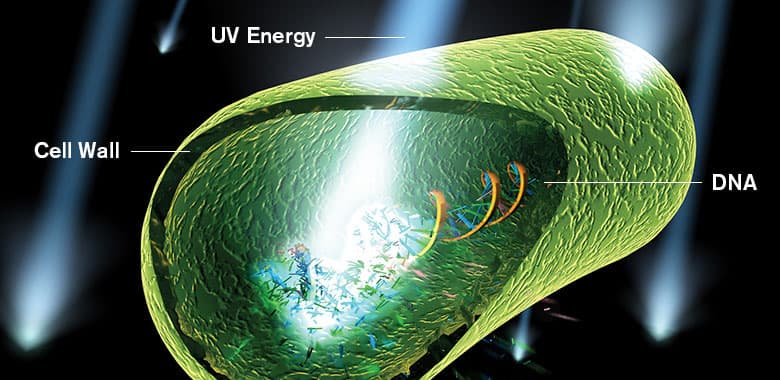


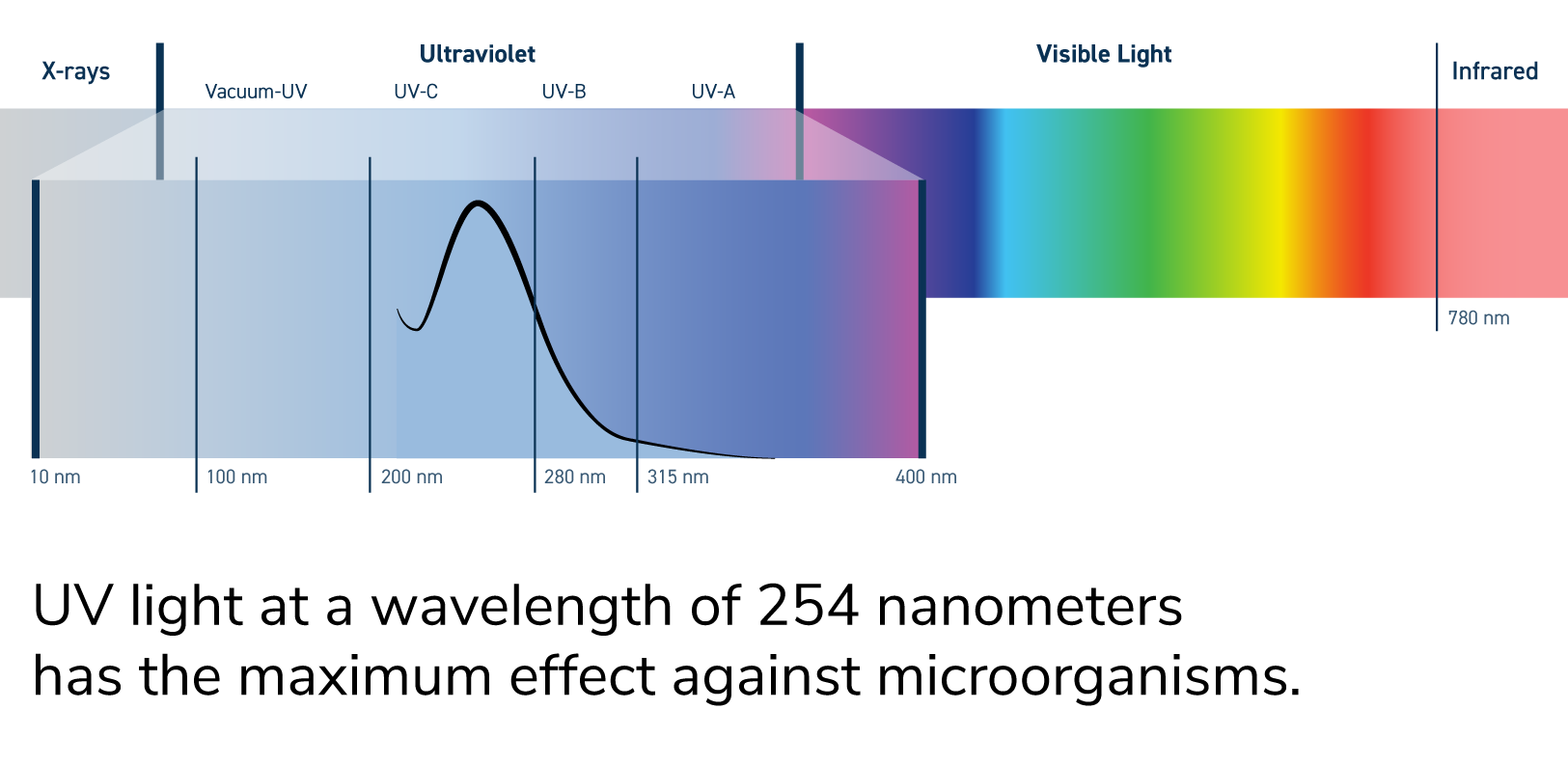
Ultraviolet (UV) light is a form of light that is invisible to the human eye. It occupies the portion of the electromagnetic spectrum between X-rays and visible light.
A unique characteristic of UV light is that a specific range of its wavelengths, those between 200 and 300 nanometers (billionths of a meter), they are capable of inactivating microorganisms such as Cryptosporidium and Giardia. This capability has allowed widespread adoption of UV light as a highly effective way to treat wastewater and drinking water.
How UV Light Treats Water
A UV lamp is quite different than your standard incandescent light bulb. Yes, electricity is still passed through a tungsten filament which heats up, but that energy “excites” a very small amount of mercury vapor contained in the lamp. It is the mercury vapor that glows and emits the UV light.
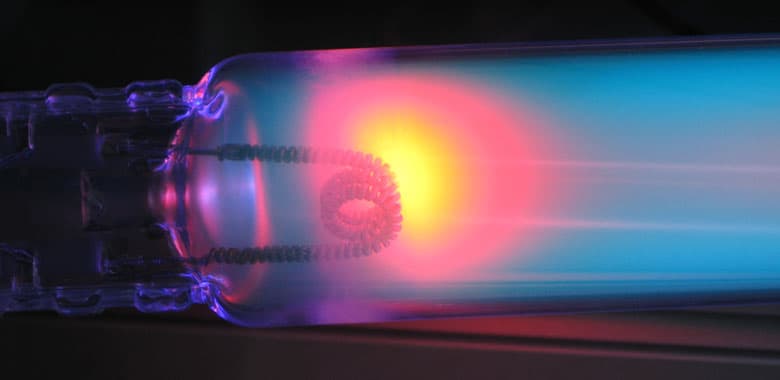
Electricity is passed through a tungsten filament which heats up, and that energy “excites” a very small amount of mercury vapor contained in the lamp.
In water treatment applications, UV light provides rapid, effective inactivation of microorganisms through a physical process. When microorganisms are exposed to wavelengths of UV light, they are instantaneously rendered incapable of reproducing.
The Effectiveness of UV Treatment
A significant body of scientific research has proven UV light’s ability to inactivate an extensive list of microorganisms. UV offers a key advantage due to its ability to inactivate certain chlorine-resistant microorganisms – most notably Cryptosporidium and Giardia.
In municipal wastewater treatment, the inactivation process is required to reduce microorganism populations (typically microbes that may cause disease in humans) before treated effluent is discharged into the receiving body of water. There are often recreational activities such as swimming or fishing where the public can come into contact with the water and downstream communities rely on these same bodies of water for their drinking water source.
In municipal drinking water treatment, UV light is often paired with chlorine, enabling robust, multi-barrier protection. UV and chlorine naturally complement each other, as UV is effective against Cryptosporidium (a chlorine-resistant microorganism). By using UV as the primary treatment method for drinking water, the required chlorine chemical CT (concentration x time) may potentially be reduced. UV doesn’t create by-products or impact the taste or odor of the water, and it’s easily integrated into existing treatment processes.
Key advantages:
UV System Validation
The effects of UV are directly related to the dose of UV energy absorbed by a microorganism. UV dose is a product of UV intensity and residence time and the required treatment limit/log reduction will dictate the required UV dose. UV dose is typically expressed in mJ/cm2 or uWs/cm2.
The residence time of the UV system is determined by the chamber design and the flow rate of the water. The intensity is affected by the equipment parameters (such as lamp type, lamp arrangement, etc.) and water quality parameters (such as UV transmittance, TSS, etc.). Unlike other treatments, UV treatment is not affected by the temperature or pH of the water.
To accurately determine the dose of the UV system for a given flow rate, bioassay validation must be conducted to take into account all the variables that can affect the UV intensity and residence time.
Our UV Brands

TrojanUV
TrojanUV delivers certified, flexible UV solutions designed to meet the demands of municipal water and wastewater treatment at any scale.
Aquafine
Aquafine delivers advanced solutions for microbial inactivation, TOC reduction, dechlorination, and ozone reduction.
VIQUA
VIQUA is a global leader in residential and light commercial UV water treatment systems with installations in 100+ countries.
AQUAFIDES
AQUAFIDES offers small- to medium-sized UV disinfection systems certified to European drinking water treatment regulations.