Due to the new Agriculture reused water regulation 741/2020 and European Directive for wastewater treatment, conversations around reuse have increased. Currently, non-potable reuse is being employed in water scarce areas throughout the region but, with extra attention directed at reuse as part of a solution for drought and water preservation, potable reuse is being explored for use in the next few years.
This comes after successful implementation of potable reuse at sites throughout North America which have helped to create a robust and reliable source of water for citizens. As conversations around water reuse continue, Spain will maintain its status as an early adopter and blueprint for how to implement reuse throughout all of Europe.
Watch
How Does Water Reuse, or Water Recycling, Work?
Loading video...
case studies
UV in Action
Recycled Wastewater for Agriculture in Spain
Advanced wastewater treatment for crop irrigation is an increasingly reliable solution that allows the pace of agricultural production to be maintained. UV used to generate high-quality...
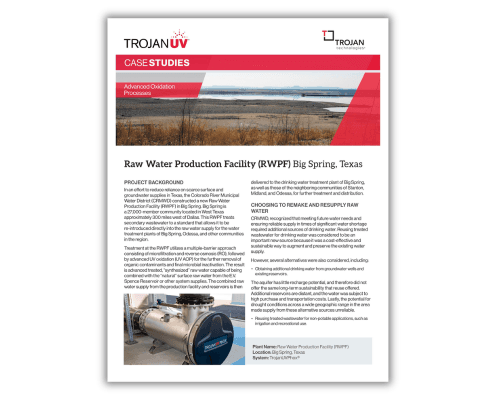
Direct Potable Reuse in Big Spring, Texas
In an effort to reduce reliance on scarce surface and groundwater supplies in Texas, the Colorado River Municipal Water District constructed a new Raw Water Production Facility in Big Spring.
Indirect Potable Reuse in Orange County, California
The Groundwater Replenishment System (GWRS), located in Orange County, California, USA, provides purified recycled water for aquifer recharge to replenish supplies and to prevent seawater intrusion.
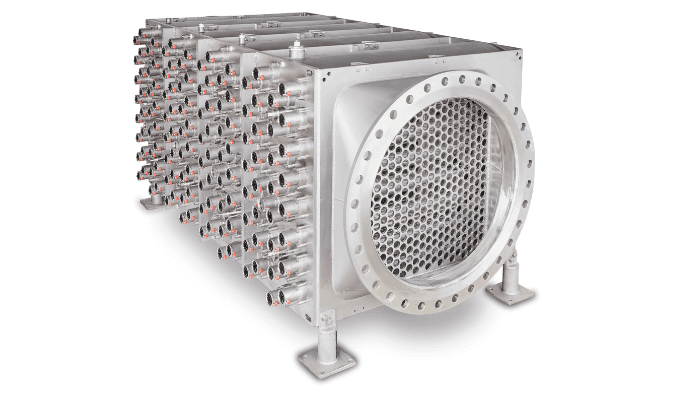
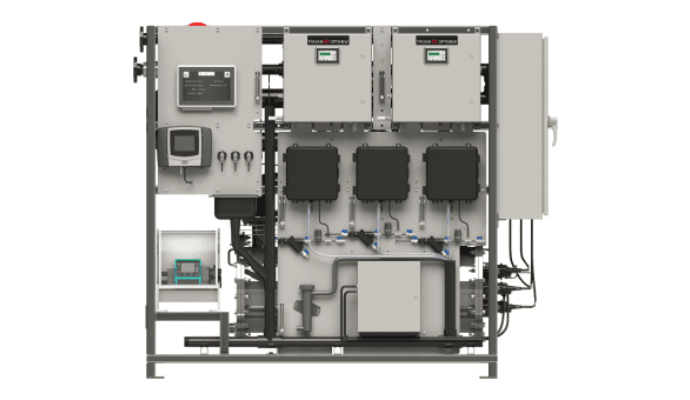
An advanced oxidation system designed to treat contaminants in potable reuse and drinking water remediation applications to provide high quality drinking water.
In 2024, Europe Implemented a New Water Treatment Regulation to Encourage the Reuse of Wastewater
The European Union (EU) released a revised version of the Urban Wastewater Treatment Directive encouraging members to promote the reuse of treated wastewater by member countries to protect water bodies and help avoid water scarcity. Additionally, when discharging water into rivers and aquafers, all EU member countries must ensure that they utilize quaternary treatment to meet stringent water treatment requirements. As such, one of the main focal points of Spain’s implementation of water reuse is ensuring the removal of emerging contaminants/microcontaminants, in which UV treatment is a key player.
Non-Potable Reuse in Spain
Non-potable reuse refers to the process of recycling wastewater for a variety of purposes outside of drinking water, including recreational and agricultural irrigation, construction, industrial processes, street sweeping, and more.
Due to the implementation of new non-potable reuse regulations in Europe, an increasing number of facilities are looking to adopt reuse to help mitigate the effects of drought. Sites such as Las Torres de Cotillas’ and the City of El Ejido’s wastewater treatment plants have been opting for non-potable reuse for agricultural irrigation for quite some time, seeing success in decreasing water scarcity throughout the region while still delivering on the effective inactivation of microbiological contaminants.
Potable Reuse in Spain
Potable reuse refers to the recycling of wastewater to help grow a community’s supply of drinking water. As more regions face increased water scarcity, due to drought and/or the depletion of aquafers, potable reuse becomes essential for maintaining a consistent and drought-resilient source of drinking water.
Currently, potable reuse is in Europe is still sparse but will prove crucial in mitigating water scarcity for future generations. With Spain being the overall leader in reuse in Europe, they have recently launched a pilot project for potable reuse at the Roses (Alt Empordà) water treatment plant. This site was inspired by the implementation of water reuse technology in Orange County, California and Big Springs, Texas. The Roses WTP has been recycling their wastewater for nearly a decade to combat water scarcity and will now use this new project as a way to understand how to best employ potable reuse throughout Spain and, eventually, the rest of Europe.