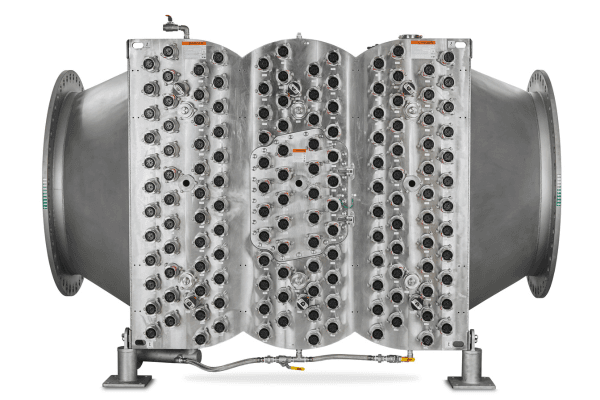


What influences the performance of a UV AOP treatment system? There are three properties of a COC (contaminant of concern) that influence its treatability by UV AOP:
UV absorption: How much UV light is taken-up by the COC
Quantum yield: The chances of a COC reacting and breaking down once it absorbs UV light
Radical rate constant: How fast a COC reacts with a specific free radical in the water
These properties vary considerably between different COC molecules, and their impact on the effectiveness of a UV AOP system is well documented in both academic and commercial literature. The focus of this document is not to review how the chemical properties of COCs themselves influence UV AOP, but instead review other critical UV AOP influencers on operation and cost, including:
UV lamp type: low-pressure or medium-pressure UV lamps
Nitrate (NO3-) concentration

Download the Fact Sheet
Have questions?
Call us at 1 (888) 220-6118 or complete the form below.
Alkalinity and pH
UV Solutions
To address water supply and quality challenges, many providers are turning to advanced water treatment processes to enable wastewater reuse and drinking water remediation. TrojanUV systems support these efforts by treating water to stringent standards, using UV advanced oxidation to break down specific contaminants like 1,4-dioxane and NDMA, ensuring the water is high-quality and useable.