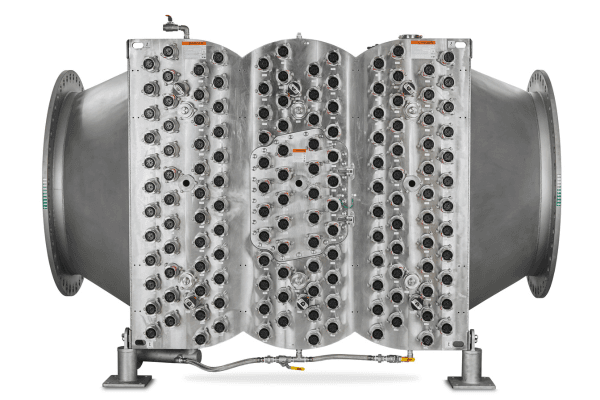


Get an overview of the UV Advanced Oxidation Process (UV AOP), a treatment approach used to address 1,4-dioxane and other emerging contaminants of concern.

This webinar provides an overview of the UV Advanced Oxidation Process (UV AOP), a treatment approach used by communities to address 1,4-dioxane and other emerging contaminants of concern. UV AOP combines ultraviolet light with oxidants to degrade chemical pollutants without generating backwash or waste streams. The technology has a low footprint, is cost-effective and is designed to remove contaminants rather than transfer them. Compared to other methods that may be experimental or unsuitable for large-scale applications, UV AOP has been implemented in full-scale systems and offers practical insights for real-world applications. What You'll Learn:
Have questions?
Call us at 1 (888) 220-6118 or complete the form below.
UV AOP Fundamentals What it is, how it works, and what’s needed to implement it
Target Contaminants Which pollutants UV AOP treats—and why it’s effective
1,4-Dioxane Deep Dive Health risks, regulatory landscape, and its prevalence across the U.S.
Real-World Case Studies Success stories from New York and Southern California
Technology Comparison Why UV AOP outperforms other oxidation and filtration methods
Operations & Maintenance What it takes to run and maintain a UV AOP system
Site Suitability How to determine if UV AOP is right for your client or facility
Resources & Support Links, contacts, and answers to your questions
Presenters:
Scott Bindner – Technical Marketing Manager Sean Mack - Business Development Manager
UV Solutions
To address water supply and quality challenges, many providers are turning to advanced water treatment processes to enable wastewater reuse and drinking water remediation. TrojanUV systems support these efforts by treating water to stringent standards, using UV advanced oxidation to break down specific contaminants like 1,4-dioxane and NDMA, ensuring the water is high-quality and useable.