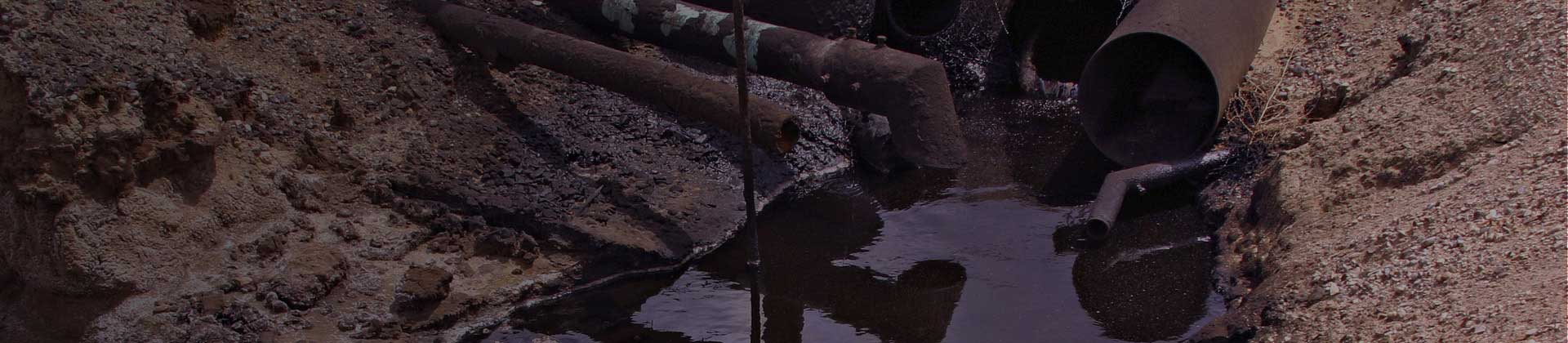


The drinking water sources we rely on every day are increasingly at risk from chemical contaminants, including substances that can be harmful or carcinogenic, and must be treated before the water is safe to use.
These contaminants can come from human activities such as industrial manufacturing, agricultural runoff and wastewater discharge, as well as natural sources such as algae and bacteria blooms. Remediation helps address this contamination in both groundwater and surface water, with UV Advanced Oxidation (UV AOP) providing an established treatment approach for breaking down a wide range of contaminants of emerging concern and helping protect water supplies.
What is surface water and how does it become contaminated?
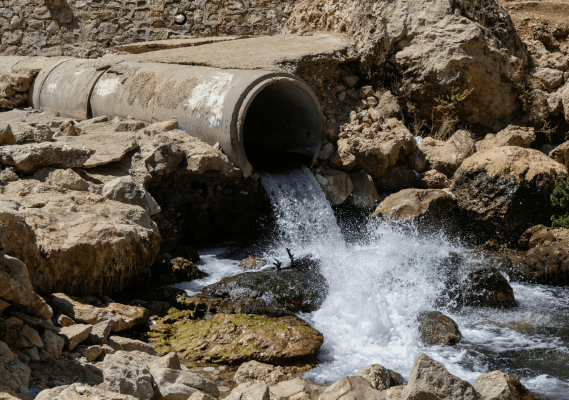
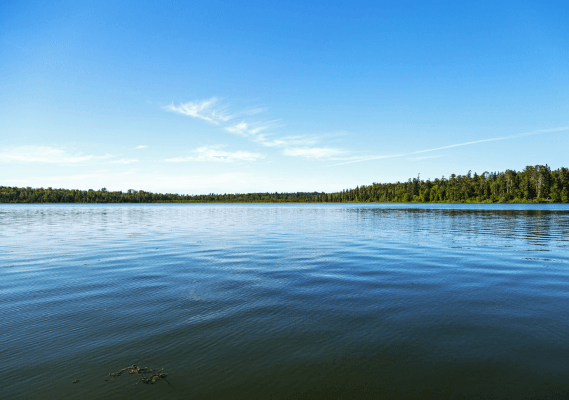
Surface water includes lakes, ponds, springs, rivers and creeks, and because these sources are exposed to human activities, animals and environmental influences, they can become contaminated with micropollutants and pathogens. Surface water remediation helps address these water quality challenges, including contaminants from sources such as industrial activity, agricultural runoff and wastewater discharge. UV AOP is an established treatment approach for surface water remediation that breaks down challenging chemical contaminants, helping protect important drinking water sources.
How does UV AOP treat contaminants in groundwater and surface water remediation?
UV AOP is an established treatment process for the remediation of chemical contaminants in groundwater and surface water. UV AOP combines ultraviolet light with an oxidant, such as hydrogen peroxide or chlorine, to generate highly reactive radicals that break down contaminant molecules in water. This process can target a wide range of challenging contaminants, including 1,4-dioxane, pesticides, algal toxins and nitrosamines such as NDMA, making UV AOP an ideal treatment option for protecting and restoring contaminated water sources.
Contaminants that UV AOP can treat in groundwater and surface water remediation applications include:
Volatile Organic Compounds
1,4-Dioxane
Trichloroethylene (TCE)
Tetrachloroethylene (PCE)
Pesticides
Metaldehyde
Atrazine
Taste and Odor Causing Compounds
2-Methylisoborneol (MIB)
Geosmin
Treatment By-products
N-nitrosodimethylamine (NDMA)
Algal Toxins
Anatoxin
Microcystin
Explosives
Hexahydro-1,3,5-trinitro1,3,5-triazine (RDX)
Hazardous Substances
Cyanide
Discover the science behind the UV Advanced Oxidation Process

Why pilot UV AOP before full-scale water remediation?
Before moving to full-scale remediation, bench-scale and pilot-scale testing can help utilities understand how UV AOP will perform with their water and contaminants, since site-specific water characteristics can strongly influence the performance of UV AOP. Testing entails measuring characteristics of water critical to UV AOP performance, including UV transmittance, pH, nitrate ion concentration, and radical scavenging. From the test results, it can be determined if UV AOP is the optimal solution and, if it is, will enable the design of a robust UV advanced oxidation system engineered specifically for the unique treatment needs of the application.
With more than 20 years of advanced treatment experience, Trojan’s scientists, researchers and technicians are industry leaders in UV AOP, bringing extensive knowledge of water chemistry, contaminant treatment and real-world applications to every project. This team has analyzed thousands of water samples from around the world and are often called upon to confirm UV AOP treatability through the rapid deployment of mobile pilot stations. From analyzing critical water characteristics and assessing feasibility to designing and supporting pilot studies, they work closely with utilities to reduce uncertainty, build confidence in their treatment strategy and lay the groundwork for successful full-scale remediation.
UV AOP eBook
Learn more about the UV advanced oxidation process in our new eBook
The UV advanced oxidation process (UV AOP) is a water treatment method often employed for the treatment of less pristine sources of drinking water, such as treated wastewater in the case of potable reuse, or contaminated groundwater aquifers in the case of groundwater remediation. Regardless of the application, the commonality of UV AOP treatment sites is the treatment of micropollutants.
case studies
UV in Action
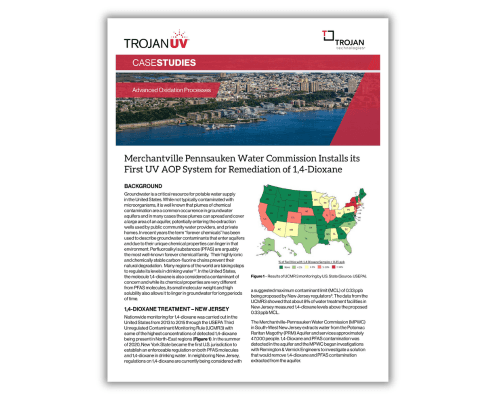
1,4-Dioxane Treatment in Woodbine, New Jersey
The Merchantville-Pennsauken Water Commission approached Trojan Technologies for a 1,4-dioxane treatment solution. The TrojanUVFlex®AOP was chosen to address their 1,4-dioxane concerns.
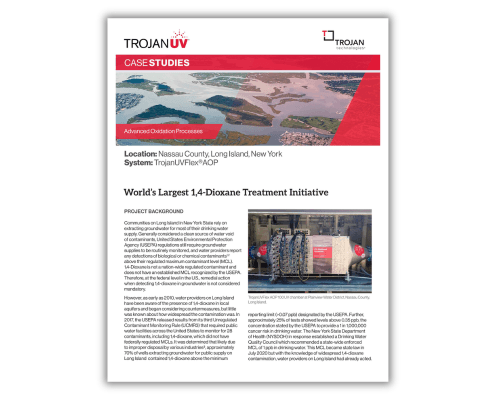
1,4-Dioxane Treatment Initiative in Long Island, NY
More than 65 sites in Nassau County needed help addressing their unique treatment needs. The TrojanUVFlex®AOP was selected for what is now the world’s largest 1,4-dioxane treatment initiative.
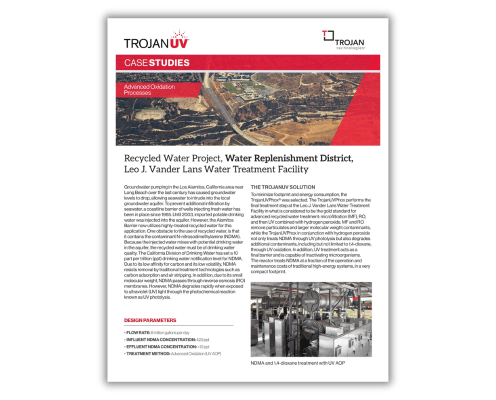
NDMA & 1,4-Dioxane Treatment in California
In San Gabriel Valley, groundwater contamination from NDMA and 1,4-dioxane necessitated advanced treatment in five facilities. A TrojanUV AOP system helped restore groundwater supplies.
TrojanUV Systems for Remediation
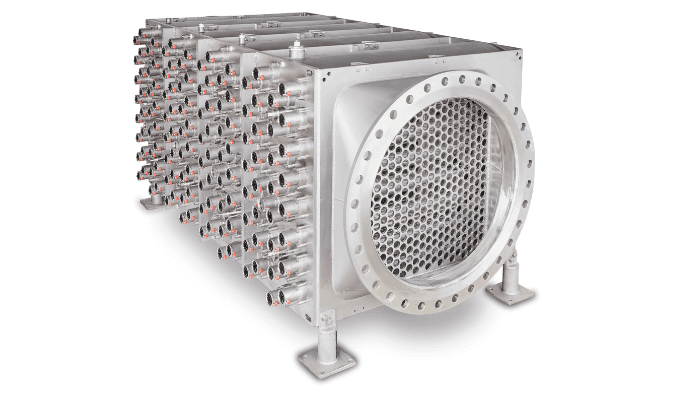
TrojanUVFlexAOP
An advanced oxidation system designed to treat contaminants in potable reuse and drinking water remediation applications to provide high quality drinking water.
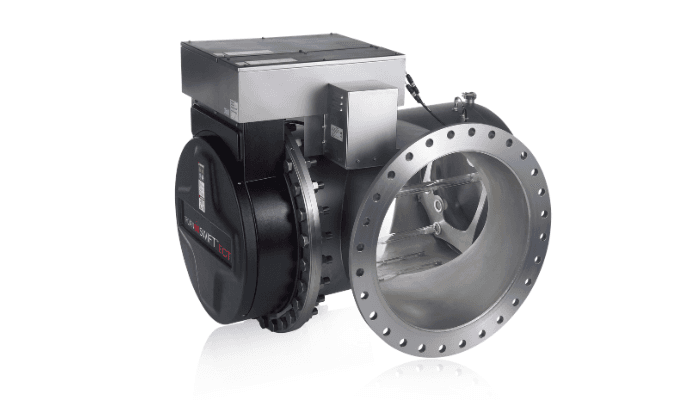
TrojanUVSwiftECT
An advanced oxidation system that treats drinking water and has the capability to provide simultaneous treatment for seasonal taste and odor events, when required.
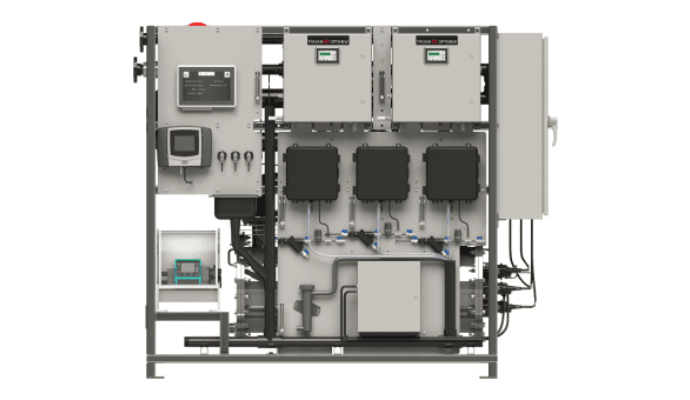
TrojanUV AOP Demonstration System
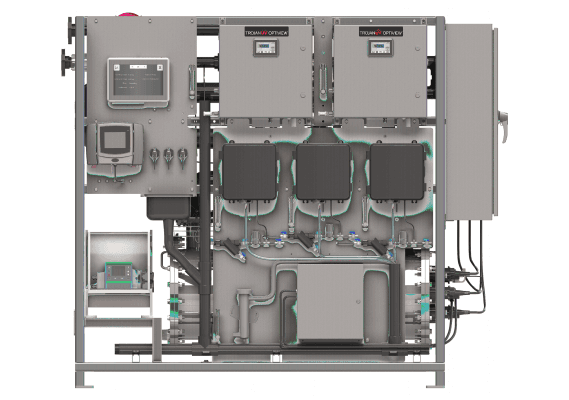
A fully packaged UV advanced oxidation system with oxidant and instrumentation options designed for piloting.
Inactivation Claims *Specific UV systems manufactured by Trojan Technologies have been validated through microbial testing. Through this testing, performance data has been generated for UV dose delivery to inactivate Escherichia coli (E. coli), fecal coliform, Poliovirus, Cryptosporidium, Giardia, and Adenovirus. For a detailed list of UV systems and target organisms, visit this page.