


Texas is the second largest state in America in terms of land size and population – and this population is predicted to increase from 29 to 51 million over the next fifty years. As the population continues to grow and with Texas’ recent droughts, the state has turned to water reuse, or water recycling, to meet the growing demand for safe drinking water.
What is the history of water reuse in Texas?
Texas has a long history of water reuse – using recycled water for agricultural irrigation since the 1800s and for industrial purposes since the 1940s and 1950s in Odessa, Big Spring and Amarillo. Today, reclaimed water is used in a variety of potable and non-potable applications in municipal and industrial spaces to ensure a resilient and sustainable water supply.
Municipal water reuse can include: gardening, composting, landscaping, toilet or urinal flushing, increasing drinking water supplies, and more. Industrial water reuse can include: process water, landscape maintenance and irrigation, industrial cooling, soil compaction and dust control, fire protection, and more.
How is potable water reuse being used in Texas?
In Texas, potable reuse is helping communities turn treated municipal wastewater into a reliable source of drinking water. The state allows both direct potable reuse, where advanced-treated recycled water is introduced into a drinking water system or the raw water supply entering a treatment plant, and indirect potable reuse, where recycled water first enters a surface water or groundwater source before receiving additional treatment. Direct potable reuse projects are reviewed individually by the Texas Commission on Environmental Quality (TCEQ), with treatment and monitoring requirements tailored to the source water and proposed system. Treatment can include technologies such as reverse osmosis and UV advanced oxidation to address a wide range of contaminants and help ensure the finished water meets drinking water standards.
Why is UV AOP piloting important for water recycling projects?
Piloting helps utilities understand how UV AOP will perform with their specific water quality and contaminants before moving to full-scale treatment. The TrojanUV AOP Demonstration System is a tool that was designed for demonstration, feasibility and pilot testing, with oxidant and instrumentation options for monitoring contaminants such as NDMA and 1,4-dioxane. Its compact design also supports public outreach, with customizable graphics and educational materials such as posters and videos that can help explain the treatment process to the community. Throughout the pilot, Trojan’s experts and scientists bring more than 20 years of advanced treatment experience guidance and technical knowledge to help utilities evaluate performance and communicate the results.
Liberty Hill: Piloting a direct potable reuse program
Texas’s water reuse journey continues to progress as communities look for new ways to build more reliable and locally controlled water supplies. In Liberty Hill, rapid growth, persistent drought and declining groundwater levels are putting pressure on traditional water sources.
Through the Pure Water LHTX program, Liberty Hill is moving forward with plans for direct potable reuse (DPR), using advanced water purification to turn recycled wastewater into purified water that can supplement the community’s existing water supply. The planned multi-barrier treatment process will treat contaminants before the purified water is introduced into the drinking water system.
Liberty Hill is also exploring how DPR can work for inland communities, where managing the brine produced by reverse osmosis can be challenging. The city is piloting two advanced treatment trains, including a traditional reverse osmosis-based process and a carbon-based advanced treatment approach designed to eliminate brine production while achieving comparable treatment targets. Trojan Technologies is helping Liberty Hill pilot both treatment trains, which include UV AOP as part of their multi-barrier treatment processes. The pilot will help determine which approach is best suited for the community, while providing an example of how inland Texas communities can continue advancing potable reuse.
CASE STUDY
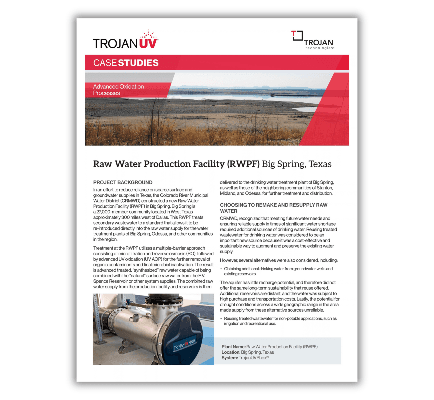
Download the case study to see potable water reuse in Big Spring, Texas
Facing limited surface and groundwater supplies, the Colorado River Municipal Water District in Big Spring, Texas, turned to potable water reuse to help create a more reliable water supply. The facility uses a multi-barrier treatment approach, including UV AOP, to treat secondary wastewater and address contaminants such as 1,4-dioxane and NDMA before the water is reintroduced into the region’s raw water supply.
Watch
How Does Water Reuse, or Water Recycling, Work?
Loading video...
TrojanUV Systems for Potable Reuse
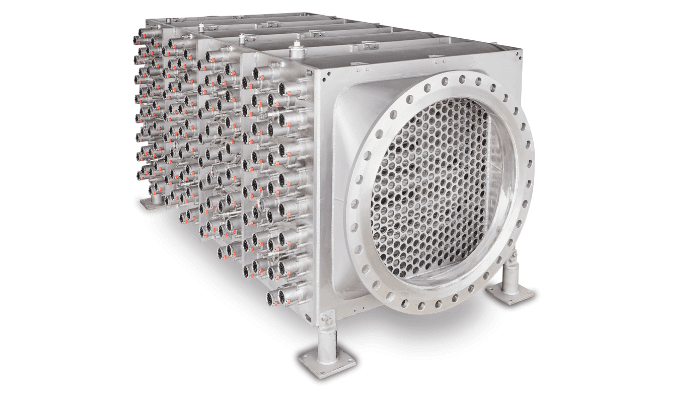
TrojanUVFlexAOP
An advanced oxidation system designed to treat contaminants in potable reuse and drinking water remediation applications to provide high quality drinking water.
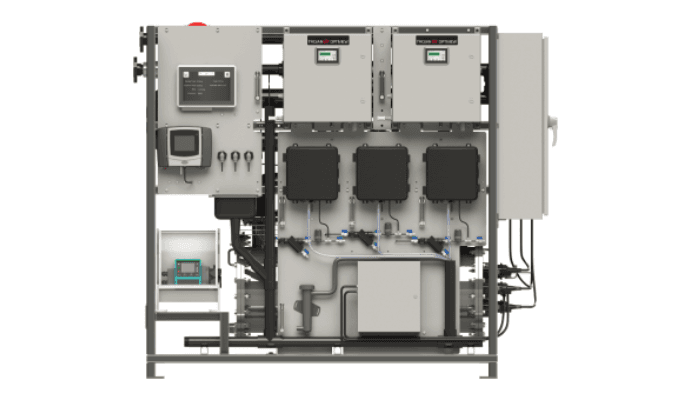
TrojanUV AOP Demonstration System
A fully packaged UV advanced oxidation system with oxidant and instrumentation options designed for piloting.
TrojanUV Systems for Non-potable Reuse
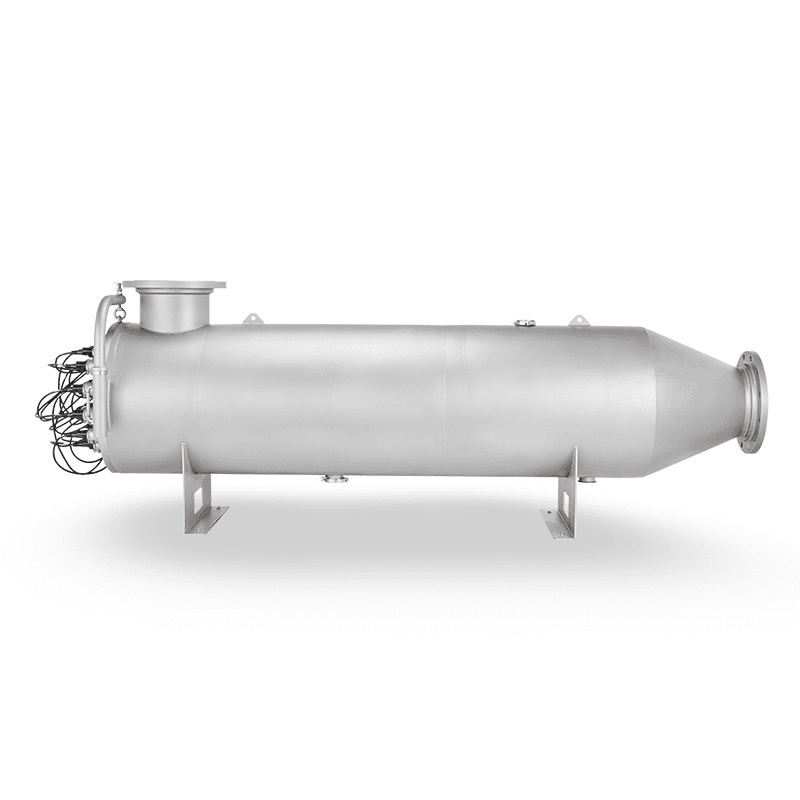
TrojanUVFocus
A flexible UV system optimized for critical non-potable reuse applications while delivering superior efficiency with fewer required lamps for high performance without compromise.

TrojanUVFlex - Wastewater
A compact and efficient UV system for non-potable reuse and other wastewater applications where treatment of filtered tertiary effluent is required.

TrojanUVFit
A UV wastewater treatment system specifically designed for sites that produce filtered effluent and prefer an in-pipe/closed-vessel UV chamber.

TrojanUVSigna
An innovative UV wastewater treatment system that reduces total cost of ownership while drastically simplifying operation and maintenance.

TrojanUV3000Plus
A preferred UV treatment system, delivering proven, reliable performance worldwide across primary and tertiary wastewater, and reuse applications.
TrojanUV AOP Demonstration System
A fully packaged UV advanced oxidation system with oxidant and instrumentation options designed for piloting.