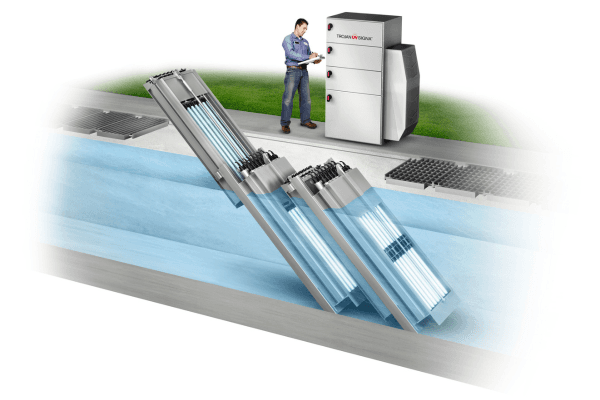


This presentation demonstrated how UV disinfection provides a safe, effective and sustainable approach to wastewater treatment, while exploring the key system components, design considerations and operational factors that help ensure reliable pathogen inactivation.
This presentation explored how disinfection is often a critical final barrier in the wastewater treatment process, ensuring that treated effluent meets regulatory requirements for the control of pathogenic bacteria and viruses prior to discharge or reuse.
Effective disinfection protects public health while preserving the ecological integrity of receiving waters. A variety of disinfection technologies are available to wastewater treatment plant designers, each offering distinct benefits, limitations, and operational considerations.
Among these options, ultraviolet (UV) disinfection stands out as one of the few non‑chemical approaches, offering a physical method for pathogen inactivation without the storage, handling, or residual impacts associated with chemical disinfectants.
UV disinfection relies on the emission of specific wavelengths of light that penetrate microbial cells and are absorbed by their genetic material, such as DNA and RNA. This absorption causes molecular damage that prevents microorganisms from replicating and causing infection, effectively rendering them inactive. As wastewater utilities increasingly seek robust, safe, and sustainable disinfection solutions, UV technology has become a widely adopted and trusted alternative.
This spotlight session provided a practical and technically grounded overview of UV disinfection technology as applied to wastewater treatment. Key system components—including UV lamps, quartz sleeves, and lamp driver technologies—were examined to explain how they influence performance, efficiency, and reliability. The session also highlighted common system features designed to improve operational simplicity and consistency, such as dose pacing controls and automated wiping systems that maintain lamp cleanliness and maximize UV light transmission through the water.

Download the eBook
Have questions?
Call us at 1 (888) 220-6118 or complete the form below.
Fundamental design parameters that govern UV system performance were discussed, with particular emphasis on the concept of UV dose delivery and the importance of accurate flow and UV intensity monitoring. Attendees gained insight into how water quality characteristics such as UV transmittance and ambient solids concentrations affect dose targets, system sizing, and overall disinfection effectiveness.
The booth-based format of this session was intentionally designed to promote hands-on learning, featuring life-sized UV modules equipped with different lamp technologies. These full-scale components allowed for clear visualization of how UV principles translate into real-world system designs, including variations in module and bank sizing to address a wide range of wastewater treatment challenges.
Attendees left with a clear understanding of why UV technology is incorporated into modern wastewater treatment designs, the key questions to consider when evaluating UV as a disinfection option, and what to expect from an operational and maintenance perspective, including reporting and routine upkeep requirements.
For more information, please download the Introduction to UV Treatment for Municipal Wastewater eBook. To speak to a Trojan expert, please fill out the form on the bottom of this page.
UV Solutions
Explore UV wastewater treatment systems that are used in many applications, including the treatment of primary, secondary, tertiary, and stormwater/combined sewer overflow effluent.