

Advanced oxidation processes (AOPs), including UV/chlorine, UV/peroxide and ozone, are effective treatment approaches, but they can also produce oxidation by-products. Some by-products are common across all AOPs, while others depend on the treatment method, oxidant used and water chemistry. For example, UV/chlorine can form chlorate and certain nitrogen-containing by-products, while ozonation can produce a broader range of by-products, including bromate. UV/peroxide does not produce these same by-products. Understanding these differences is an important part of choosing the right AOP. Utilities need to consider not only how effectively a process removes target contaminants, but also cost, water chemistry and how potential by-products fit within the overall treatment process. Download the fact sheet to learn more about oxidation by-products and see how UV/chlorine, UV/peroxide and ozone compare.

Download the Fact Sheet
Have questions?
Call us at 1 (888) 220-6118 or complete the form below.
UV Solutions
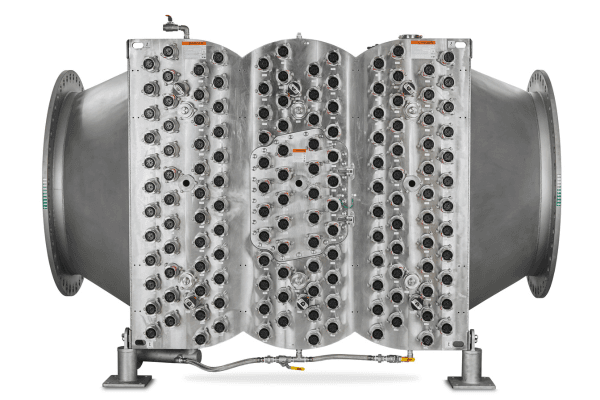
To address water supply and quality challenges, many providers are turning to advanced water treatment processes to enable wastewater reuse and drinking water remediation. TrojanUV systems support these efforts by treating water to stringent standards, using UV advanced oxidation to break down specific contaminants like 1,4-dioxane and NDMA, ensuring the water is high-quality and useable.