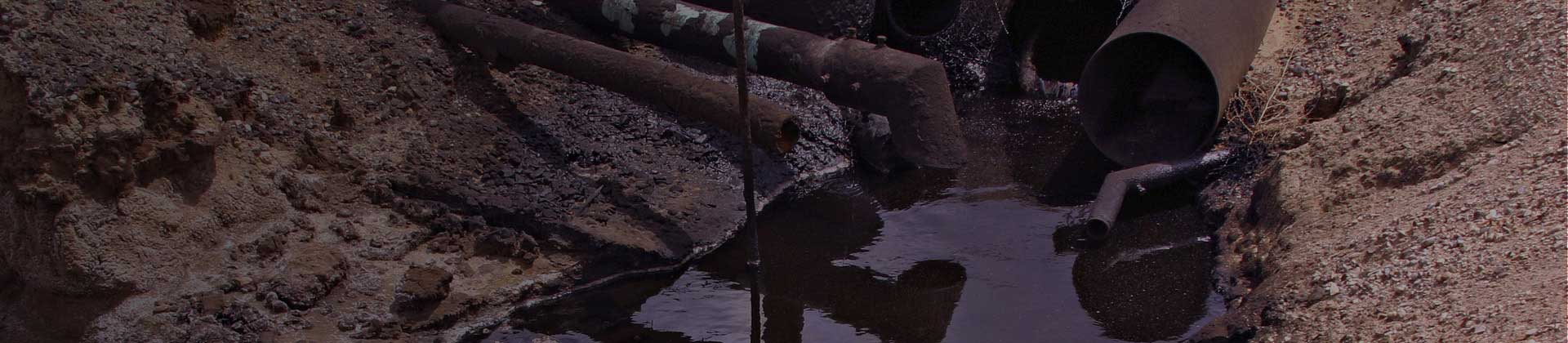


Contaminated Sources of Drinking Water
Drinking water sources we rely upon every day are increasingly at risk of chemical contamination. Many of these contaminants have been proven harmful or carcinogenic and must be treated and removed in order for the water to be considered usable.
These contaminants may come directly from human sources such as industrial manufacturing, agricultural run-off and wastewater discharge, or they may originate from natural sources, such as the taste and odor-causing chemicals in water generated by algae and bacteria blooms.

UV AOP eBook
Learn more about the UV advanced oxidation process in our new eBook
The UV advanced oxidation process (UV AOP) is a water treatment method often employed for the treatment of less pristine sources of drinking water, such as treated wastewater in the case of potable reuse, or contaminated groundwater aquifers in the case of groundwater remediation. Regardless of the application, the commonality of UV AOP treatment sites is the treatment of micropollutants.
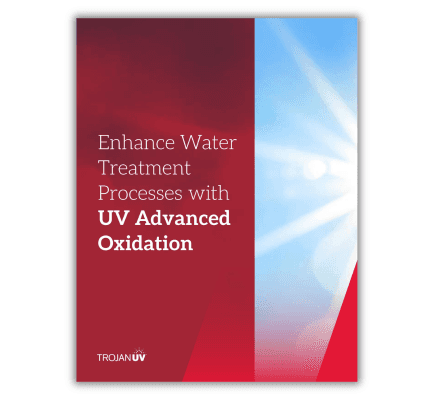
UV Advanced Oxidation Breaks Down Contaminants in Water
The UV advanced oxidation process (also known as UV AOP) is an established technology for the remediation of contaminants in groundwater and surface water. Our systems have been installed around the world to treat a variety of contaminants.
Volatile Organic Compounds
1,4-Dioxane
Trichloroethylene (TCE)
Tetrachloroethylene (PCE)
Pesticides
Metaldehyde
Atrazine
Taste and Odor Causing Compounds
2-Methylisoborneol (MIB)
Geosmin
Treatment By-products
N-nitrosodimethylamine (NDMA)
Algal Toxins
Anatoxin
Microcystin
Explosives
Hexahydro-1,3,5-trinitro1,3,5-triazine (RDX)
Hazardous Substances
Cyanide
UV AOP Fact Sheet
UV AOP or Granulated Activated Carbon: What Are the Differences When Treating 1,4-dioxane?
Contaminant treatment utilizing UV AOP does not physically remove contaminants from the water like granulated activated carbon (GAC) does. Instead, UV light breaks chemical bonds to break down chemical contaminants in water. A water treatment plant with GAC filters designed to remove environmental contaminants might need to consider incorporating a UV AOP system if 1,4-dioxane is eventually detected in GAC effluent.
case studies
UV in Action
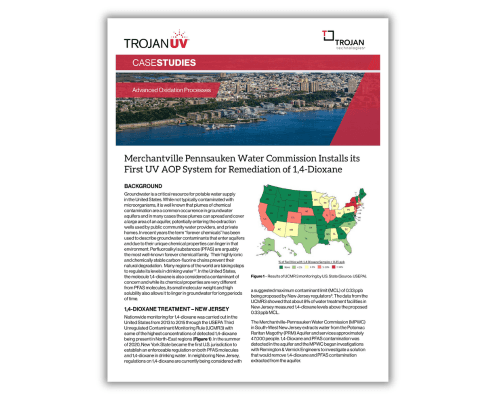
1,4-Dioxane Treatment in Woodbine, New Jersey
The Merchantville-Pennsauken Water Commission approached Trojan Technologies for a 1,4-dioxane treatment solution. The TrojanUVFlex®AOP was chosen to address their 1,4-dioxane concerns.
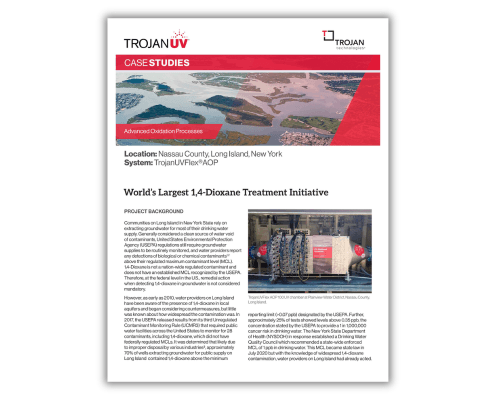
1,4-Dioxane Treatment Initiative in Long Island, NY
More than 65 sites in Nassau County needed help addressing their unique treatment needs. The TrojanUVFlex®AOP was selected for what is now the world’s largest 1,4-dioxane treatment initiative.
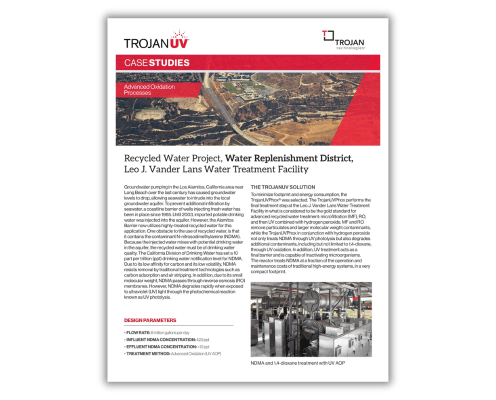
NDMA Treatment for Recycled Water in Los Alamitos, California
The Leo J. Vander Lans Water Treatment Facility needed to address NDMA contamination in recycled water. The TrojanUVPhox® was chosen to minimize footprint and energy consumption.
TrojanUV Systems for Remediation
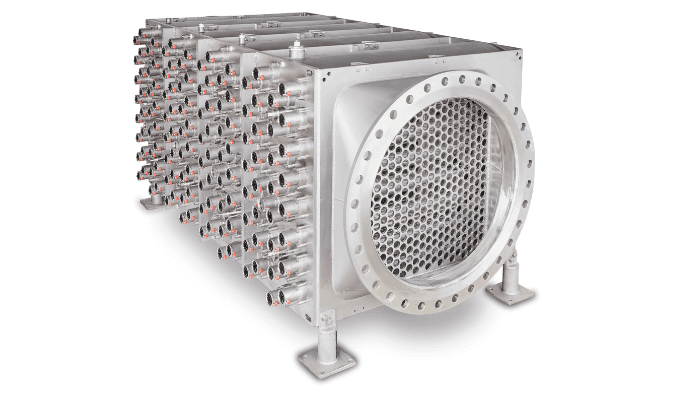
TrojanUVFlexAOP
An advanced oxidation system designed to treat contaminants in potable reuse and drinking water remediation applications to provide high quality drinking water.
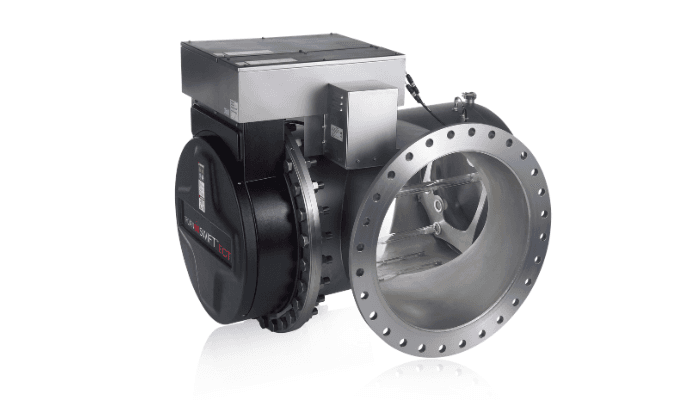
TrojanUVSwiftECT
An advanced oxidation system that treats drinking water and has the capability to provide simultaneous treatment for seasonal taste and odor events, when required.
The UV Advanced Oxidation Process
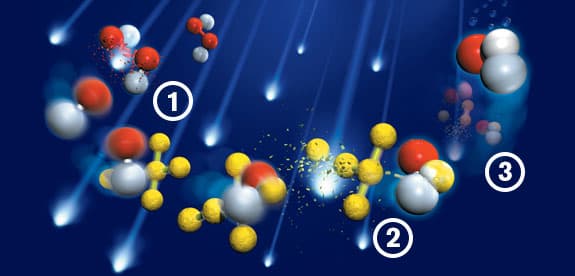
UV AOP uses ultraviolet light, alone or in combination with an oxidant, to break down chemical contaminants in water.
UV converts the oxidant (e.g., hydrogen peroxide) into highly reactive oxidizing radicals.
The oxidizing radicals attack and decompose contaminants.
At the same time, UV light treats the water.
Effective Removal of 1,4-dioxane
Not all contaminants can be easily removed from water using processes like microfiltration, granular activated carbon or reverse osmosis. For contaminants such as 1,4-dioxane and certain nitrosamines, UV AOP is the only practical and proven solution.
Simultaneous Treatment
Our UV AOP systems can also perform treatment to obtain log reduction credits for target organism inactivation*. This is ideal for water providers needing to meet requirements of the Surface Water Treatment Rule, Long Term 2 (LT2) Enhanced Surface Water Treatment Rule, or the Groundwater Rule, in addition to their contaminant removal needs.
Elimination of Residuals
Many other treatment technologies merely transfer the contaminant from one phase to another (e.g. air stripping: from water to air) resulting in a potentially hazardous, contaminant-laden residual that requires further treatment or disposal.
Compact Footprint
UV AOP occurs instantaneously within the UV chamber, eliminating the need for the large concrete contact basins or steel pipes commonly used in conjunction with ozone. This allows UV advanced oxidation systems to be easily retrofitted into existing water treatment facilities.
Let’s Determine if UV AOP Makes Sense for Your Plant
Our on-site Environmental Containment Treatment laboratory, run by our renowned team of scientists and researchers, has analyzed thousands of water samples from around the world.
Loading video...
Inactivation Claims *Specific UV systems manufactured by Trojan Technologies have been validated through microbial testing. Through this testing, performance data has been generated for UV dose delivery to inactivate Escherichia coli (E. coli), fecal coliform, Poliovirus, Cryptosporidium, Giardia, and Adenovirus. For a detailed list of UV systems and target organisms, visit this page.